Buying Guide · 7 min read · 3 April 2026
Polki vs Kundan: A Simple Guide to Telling Them Apart
Polki and Kundan look like cousins on the counter, but one holds diamond value and one does not. Here is the difference in plain words, and how to choose.
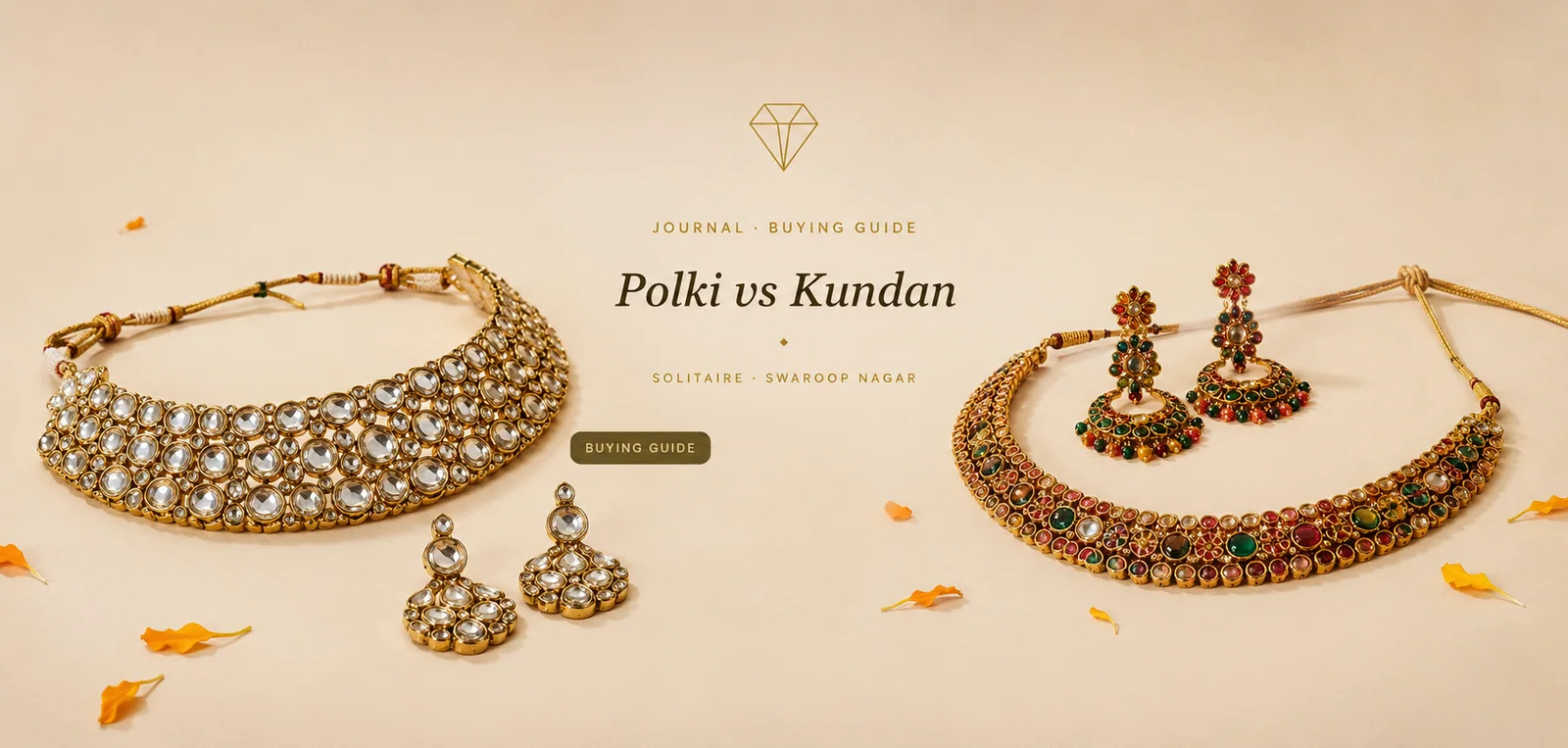
Walk into a jewellery shop in Kanpur, ask to see Polki, and half the time you will be shown Kundan instead. The two words get used as if they mean the same thing. They do not. The pieces can look like cousins on the counter, but what they are made of, and what they are worth, is not the same at all.
If you are buying for a wedding, or buying something you hope to hand down, the difference is worth ten minutes of your time. Here it is, the way we explain it to families who sit across from us at the boutique.
What Polki really is
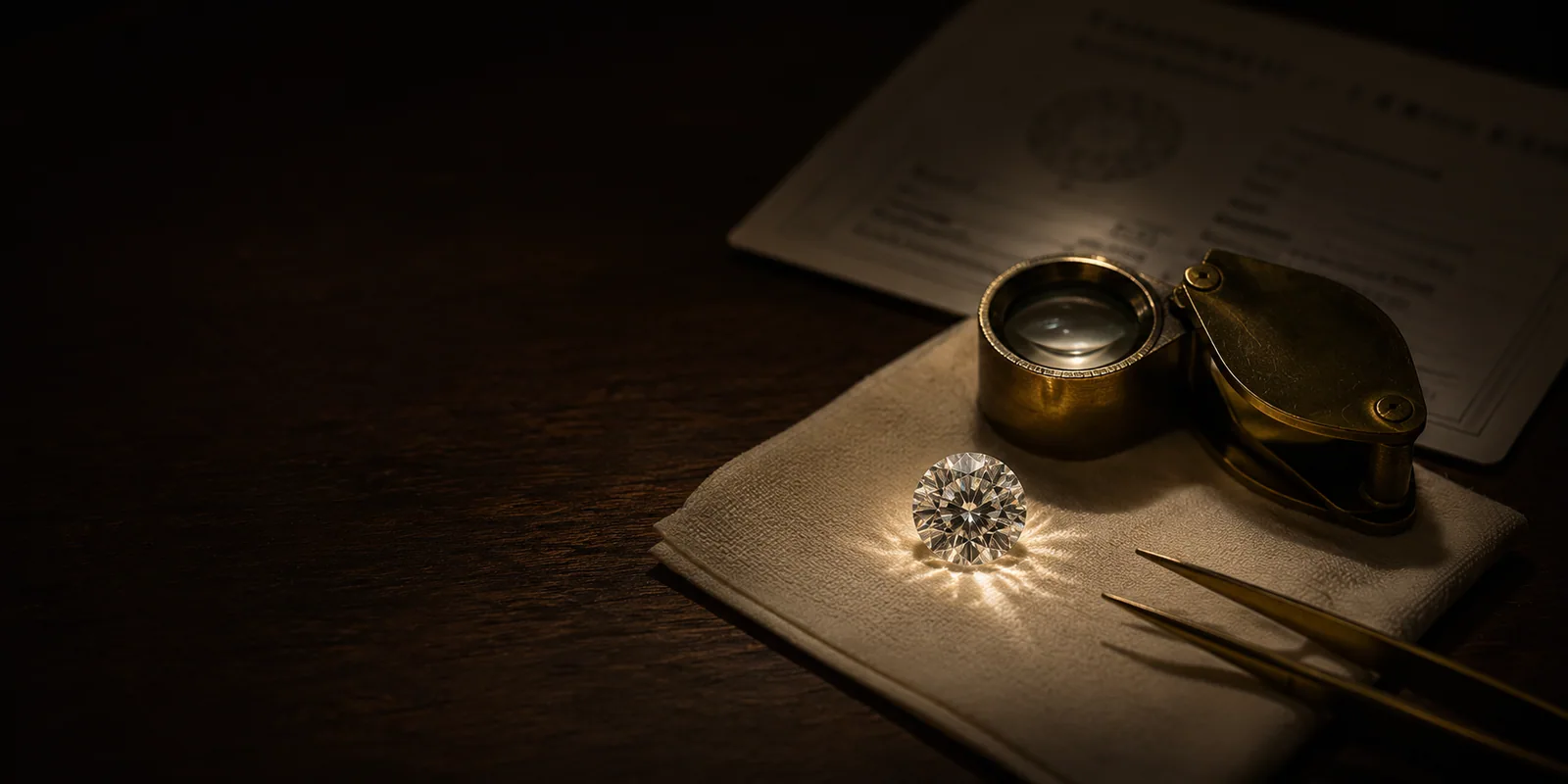
Polki is diamond. Specifically, it is uncut diamond, the natural rough that has been flat-cut and polished only enough to bring out its colour and shine. There is no faceting and no machine cutting. The stone stays close to the form it came out of the earth in.
Because the diamond is barely touched, every Polki stone is a little different. The brilliance is soft and milky rather than sharp. It is set into 22K or 24K gold by hand, using a technique where the goldsmith shapes the metal around each stone. Our Polki comes from two workshops in Jaipur we have worked with for more than ten years.
What Kundan really is
Kundan is a setting technique, not a stone. In traditional Kundan work there is no diamond at all. The bright white stones you see are usually glass, backed with a thin mirror foil so they throw light. The skill sits in the gold: refined gold is worked into thin strips and layered to hold each stone, then finished to a smooth, glassy surface.
This is old, patient work, and a good Kundan piece can take weeks to make. But the value lives in the gold and the labour, not in the stones.
The differences that actually matter
- What the stones are: Polki uses real uncut diamond. Traditional Kundan uses glass or other non-diamond stones.
- How they catch light: Polki has a soft, frosted glow. Kundan is brighter and sharper, almost mirror-like.
- What they are worth: a Polki piece is valued as gold plus diamond. A Kundan piece is valued as gold plus craftsmanship.
- Price: weight for weight, Polki costs more because of the diamond content.
- Feel: Polki pieces tend to sit heavier and more substantial on the body.
Which one holds its value
This is the single most useful thing to understand. The uncut diamonds in a Polki piece keep their worth over time, the same way faceted diamonds do. If you ever have the piece valued, the diamond is counted.
Kundan is valued on its gold weight and the quality of the work. The stones add beauty, not resale value. Neither is better or worse than the other. They are simply different things, and you should know which one you are paying for.
A Polki piece is valued as gold and uncut diamond. A Kundan piece is valued as gold and craftsmanship. The difference is the diamond.
How to tell them apart yourself
You do not need to be an expert. Hold the piece under a steady light. Polki stones look slightly uneven, with a warm, natural depth, and no two are quite alike. Kundan stones look uniform and very bright, because foil-backed glass reflects light evenly.
Now turn the piece over. Traditional Kundan is often open at the back, or you can see the foil behind the stones. Polki settings usually enclose the stone in gold. If you are still unsure, ask the jeweller plainly whether the stones are diamond, and ask for that to be written on the bill.
Which is right for your wedding
For most brides it comes down to budget and feeling. Polki feels like an heirloom from the first day, and it carries real diamond value, so it makes sense as the piece you plan to keep and pass on. Kundan is lighter on the budget and reads beautifully in photographs, which makes it lovely for pieces worn once or twice.
Plenty of our brides choose both. A Polki necklace for the main ceremony and the years after, and a Kundan choker for the lighter functions. One day the daughter inherits the Polki. The choker travels with the bride.
Questions we hear often
Is Polki always more expensive than Kundan?
Usually yes, because Polki contains real uncut diamond and traditional Kundan does not. Two pieces of the same gold weight will differ in price mainly because of that diamond.
Can a single piece be both Polki and Kundan?
Yes. Many bridal sets use uncut Polki diamonds held with the Kundan setting technique. In that case you are paying for both the diamond and the gold work, so ask for a clear breakdown of each.
Does Kundan have any resale value?
It holds its gold value. The stones do not add to resale because they are not precious. That is worth keeping in mind if resale matters to you.
The honest way to settle it is to see both side by side. We keep Polki and Kundan in the boutique in Swaroop Nagar, and we will lay them out under the same light, on the same cloth, and let you decide with your own eyes. There is no pressure to buy. Most people know within a minute which one they want.